From Vape Shops to Pokémon Cards: The 2026 Retail Shift That Favors Vending Machines
Share
The version of this story making the rounds is simple: vape shops boomed, and trading card shops are next. The data tells a bigger one. The entire tenant mix of American retail is turning over inside a supply-starved market, and both waves are symptoms of the same churn. Here is what is actually filling retail space in 2026, what the numbers really say about the vape and Pokémon card waves, and why the pattern keeps pointing at unattended retail.
Every retail wave runs the same shape
Retail in 2026 is tight, uneven, and barely building
National retail vacancy sat near 4.3 percent through the third quarter of 2025 with negative net absorption, and 2025 was on pace to be one of the weakest years for new retail development this century, per CoStar and the PwC and ULI Emerging Trends report. At the same time, Coresight tracked store closures running near 15,000 for the year, roughly double 2024.
Put those together and the picture is clear: almost no new space is being built, a wave of boxes is coming back to market, and the entire story is who backfills fastest. The market is also splitting down the middle. Value and necessity formats are thriving while undifferentiated mid-tier retail closes. Every category trend below plays out against that backdrop.
The structural shift: services overtook goods
The single most important finding of the past year: in 2025, service-based tenants such as gyms, med spas, restaurants and recovery concepts leased more retail square footage than goods-based tenants for the first time on record, just over half of all activity according to CoStar, up from roughly 40 percent fifteen years ago. The shorthand is a shift from buying things to doing things.
Individual hot categories come and go. The durable move is product retail giving ground to services, experiences and value formats. For product categories that still print money, the real question becomes which format carries them, because increasingly it is not a 1,500 square foot lease.
The vape wave: real, and now maturing
The vape shop boom is well documented. The category grew at roughly an 18 percent average annual rate from 2018 to 2023, and IBISWorld counted about 10,500 dedicated vape shops in 2024, up around 13 percent year over year. Counting tobacco stores and combination smoke shops, the broader universe sits near 52,000 locations.
The more recent story is consolidation. Regulatory complexity, notably the PACT Act curbing online vape sales, plus flavor restrictions and rising rents, has accelerated closures among smaller operators. The store count is likely flattening or declining modestly while revenue per surviving store rises. There is also a quiet category morph: after the 2018 Farm Bill, a large share of vape shops added Delta-8, CBD and other hemp products and effectively became hemp and smoke shops.
The lesson is not that vape demand died. It is that hot niches saturate fast, and then regulation and rent squeeze whoever carries the most fixed cost. In that phase, demand concentrates into lower-overhead formats, which is exactly where age-verified vape vending machines sit.
The Pokémon and TCG wave: demand first, storefronts later
The demand data here is stronger than vape ever produced:
- Walmart Marketplace trading card sales jumped about 200 percent between February 2024 and June 2025, with Pokémon up more than tenfold year over year.
- Target reported card sales up nearly 70 percent and on track to top 1 billion dollars in 2025. eBay reported card sales rising for ten straight quarters, and StockX reported Pokémon up 367 percent.
- Circana called toys the fastest-growing industry it tracked across all US industries in early 2025, driven by new Pokémon releases and collectible sports cards.
- The global trading card game market reached roughly 8.4 billion dollars in 2025 and is projected to hit about 16.9 billion by 2035, with the US market near 2.2 billion.
One nuance worth flagging: the storefront data for card shops is softer than the sales data. There is no clean national card shop count spiking the way vape shops did a few years ago. What exists is strong indirect evidence, including specialty lenders now financing collectors who open physical shops, and the fact that offline retail still makes up roughly 55 percent of the TCG market. Storefronts are clearly rising, but this reads as an earlier and more fragmented wave than vape. Translation for operators: it is still early.
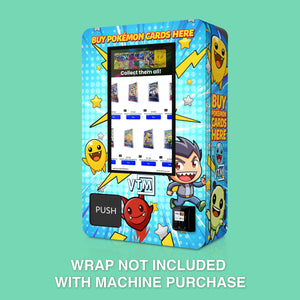
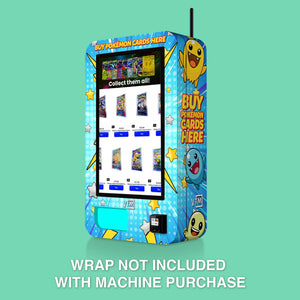
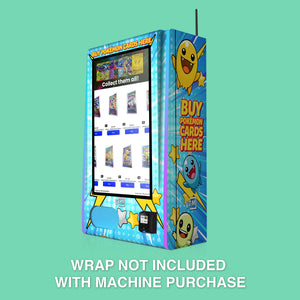
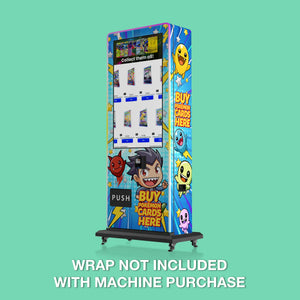
Target reportedly pulled back on Pokémon cards over theft and security concerns, a retreat from mass-market availability that pushes demand toward specialty stores and automated retail. Meanwhile Pokémon is printing at maximum capacity, and new production facilities are not expected online until 2028. Record demand, engineered scarcity and theft sensitivity in a single category. That is the exact profile a secured Pokémon card vending machine is built for.
Who is actually filling the empty boxes
Beyond the two niches, here is who is doing the real square-footage absorption right now.
Discount and value
This is where the volume is. Dollar General, Dollar Tree, Aldi and Five Below together planned on the order of 1,800 new locations in 2025, the most concentrated expansion of any segment. Dollar General operates around 21,000 stores, Five Below is targeting 3,500 by 2030, and Burlington is pushing toward 2,000. They are absorbing the boxes left by Bed Bath and Beyond, Joann, Rite Aid and Big Lots.
Services and wellness
Boutique fitness, med spas, IV therapy, recovery concepts and blow-dry bars are replacing apparel-heavy tenants, often moving into former drugstore, bank and casual-dining spaces. This is the fastest-growing slice of the leasing mix and the engine behind services passing goods.
Food and experiential
Chipotle opened about 304 US restaurants, Jersey Mike's roughly 300 to 350, Dutch Bros around 165 and Starbucks about 175. Pickleball venues and food halls are becoming anchor replacements, and Barnes and Noble opened around 57 stores, its first growth in over a decade.
The pattern that keeps repeating
Every specialty retail wave of the past decade shares the same four ingredients: a viral or social driver, a resale or investment angle, impulse purchasing, and a big-box channel that reacts slowly or retreats outright. Vape had all four. Trading cards have all four right now. Hemp and CBD, med spas, pickleball, sports cards and the Labubu craze are each running a version of the same play.
The strategic read is not to chase whichever category is hot this quarter. It is to own the format that wins every wave.
Why unattended retail keeps winning these waves
- Secured dispensing removes theft. Product stays locked until payment clears. The shrink problem pushing national chains away from trading cards does not exist inside a machine.
- 24/7 impulse capture. Machines sell in high-traffic, non-specialty locations while storefronts are closed and big-box shelves sit empty.
- A fraction of the fixed cost. No buildout, no staff, no long-term lease on 1,500 square feet. When regulation or rent squeezes a category, the lowest-overhead format survives it.
- Speed to market. A vending machine deploys in weeks. A storefront takes months, a buildout budget and a personal guarantee.
As service tenants absorb the leases and product retail concentrates into discount formats, the durable whitespace for product retail is the impulse, scarcity and theft-sensitive segment. Trading cards are the clearest example today. The next wave, whatever it turns out to be, will fit the same profile.
Build for the wave, not the category
VTM Vending builds smart vending machines for exactly these niches: age-verified vape and nicotine vending and secured Pokémon card vending, backed by software, wholesale sourcing and operator support across all 50 states and Canada.
Or browse the full machine lineup at vtmvending.com.
Frequently asked questions
Why are Pokémon card vending machines growing so fast in 2026?
Demand is at record levels while supply stays constrained. Marketplace card sales jumped triple digits, Target pulled back on Pokémon over theft concerns, and new printing capacity is not expected until 2028. Secured vending machines capture that demand 24 hours a day without theft risk or staffing costs.
Is vape vending still a good business in 2026?
The vape retail category is consolidating rather than disappearing. Regulation and rising rents squeeze small storefronts hardest, which shifts surviving demand toward low-overhead formats. Age-verified vape vending machines carry a fraction of a storefront's fixed costs, which is the advantage that matters most in a maturing category.
What retail trends favor unattended retail right now?
Three at once. Service tenants passed goods tenants in retail leasing for the first time on record, national vacancy sits near 4.3 percent with very little new construction, and big-box chains are retreating from theft-prone impulse categories. Product demand does not vanish in that environment; it moves to formats that need no lease, no staff and no open shelf.
Where should operators place trading card vending machines?
High-traffic, non-specialty locations where collectors already spend time: grocery stores, malls, entertainment venues, barbershops, gas stations and card show venues. The goal is impulse capture in places where mass retail is absent or sold out.
How do vending machines solve the retail theft problem?
Product stays locked until payment clears, so shrink from open shelving disappears entirely. That is the same theft problem pushing national chains away from trading cards, and the machine format solves it structurally rather than with security policies.
Sources: CoStar, Coresight Research, IBISWorld, Circana, JLL, PwC and ULI Emerging Trends in Real Estate, and industry trade coverage. Figures are the most recent available as of July 2026 and reflect a fast-moving market; treat single-source numbers as directional.